

As this year nears its end and Zen Tenkara approaches 15 years in business, I find myself reflecting on my own fly fishing journey. When I was introduced to fly fishing, I had little time in my life for leisure activities or relaxation. I was a wife, a mother, a professional with a career that was very demanding. What little time I had to indulge myself was precious. Then, on one trip to a local river, I was introduced to a tenkara rod. This was the day my attitude towards fly fishing began to change. Clearly, it was not love at first sight, but there was a sort of immediate attraction, a curiosity if you will. This little, delicate rod that collapsed so small seemed less daunting, less complicated, straightforward. With no reel it felt so light. It felt harmless, maybe even friendly. I could make sense out of this direct approach - a stick with a line hanging off it. I never understood why I carried 90ft of line and 100ft of backing on a reel to cast to fish 20ft to 30ft away. And when I was busily mending, mending, always mending my line dealing with back currents and eddies, who would notice a discrete tap or tick on the end of line? Obviously not me. I'm not sure how I got past those early days of fishing but today I credit my strong aversion to touching fish, to improving my hook sets. As I improved, flies only nipped lips and made hook removal dramatically less traumatic for me but more importantly and critically, the fish too. I owe it all to Tenkara. My success in fly fishing, all of it, is a direct result of what I have learned through tenkara fishing. Period. Regardless of fresh or saltwater application, the background was, the background is, tenkara. As the owner of Zen Tenkara, obviously I use tenkara rods, all 7 Zen models in fact. But I do not fish tenkara exclusively. I love being versed in multiple methods and styles. Each offer something just slightly different and yet also the same. Every species I land, every destination I travel to, every water I fish, teaches me something new and I actively try to learn from each experience.
The Reluctant Angler
My first trips to the river were not exceptional. They were not relaxing nor did they fill my soul with a connection to nature. In fact, I would describe those early days on the river as being somewhat torturous. Leisure was nowhere to be found. Frustration and discomfort were better descriptors, starting with the waders and trying to find some level of comfort in their uncomfortableness - men's waders, that did not fit me in the least.
The frustration continued while trying to thread hair-like material through holes smaller than any sewing needle I had ever encountered. In wind and glare. As I reached a point of near tantrum, I would finally get my fly tied on. Almost immediately I'd break it off, on a branch, on a leaf, on a twig or a blade of innocent looking grass, never to be found or even fished. Not only did this start the process over again and required me to tie on another fly, but in the back of my mind I could hear the cash register at the fly shop cha-chinging. Two dollars, five dollars, twelve dollars. An easy $20 could be cast away, literally, in one outing. On especially frustrating days, it could add up to more.
Not only were the flies lost, but the tangles that often accompanied the event caused even more irritation: That same hair-like material tangled into an ungodly mess. It seemed to only take a few simple casts to achieve what I would describe as a rabid bird's nest. This was not "relaxing". It was not meditative nor uplifting. I found zero magic in these outings and often felt deflated and exhausted from the trips. But I continued to go along on these fun fishing adventures more as a "marital obligation" than anything else. In secret I would pray for rain and lightning or other events that would cancel the trip and save me from more river torture, although his rarely happened.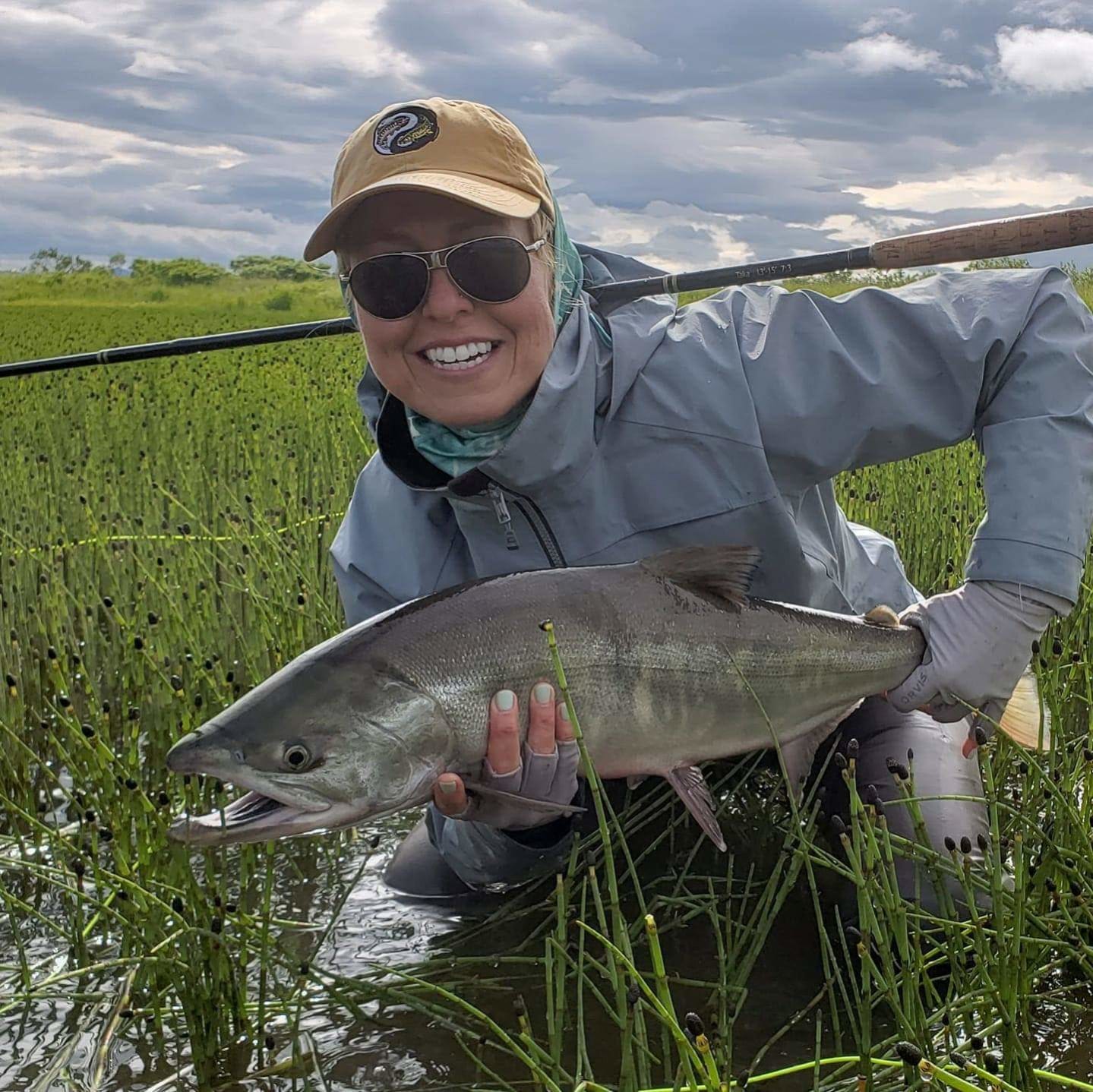
On this "new" tenkara rod, I didn't need to mend so I could focus on the feel more. This super light, super sensitive rod made those little hits less obscure, and I began to notice and recognize hits. After that very first day on a tenkara rod and forward, I staunchly refused my reel and over time I began to my surprise, to catch fish. With my "river caddy" beside me, coaching me through landings, netting my fish and extracting hooks, I grew in confidence. So much in fact, that I began to venture out on my own. This presented a whole new set of challenges for me, still the novice angler.
Managing and guiding fish to my net took lots of practice. I was hooking them but now also had to land them myself. Simply "beaching" the fish was rarely an option due to the river's thick foliage or rocky bank. Initially I lost many.
Eventually I realized slack in the line, of any kind, was my mortal enemy. Keeping moderate tension on the line was critical. Not too little, not too much, just the right amount to maintain zero slack but not break the tippet. This was the secret sauce for landing fish. In those days, admittedly, I kept my tenkara line and setup short and tight so keeping everything slack-free was easy. Fly removal, however, was a different story.
Newer anglers tend to have slower hooksets. They have less practice and react slower, resulting in the fish taking the fly/hook deeper. Instead of the fly snagging the fish's lip or corner of its mouth, the fish swallow the fly making even barbless hooks difficult to remove without injury. These deep takes paired with my initial revulsion to touching fish (yes revulsion), could cause me both terror and tears, not to mention shame and guilt for the mishandling that I am certain occurred. I tried my best and would even hold my breath for whatever time I held the fish out of water, trying to share the pain of it all.
Yes, I cried when I hooked fish in anticipation of what would have to happen next. I was a bag of mixed feelings. Upon discovering a deep take by my netted fish, I would panic and immediately scan the river for any nearby anglers that might come to rescue both me and the fish, by removing the hook for me.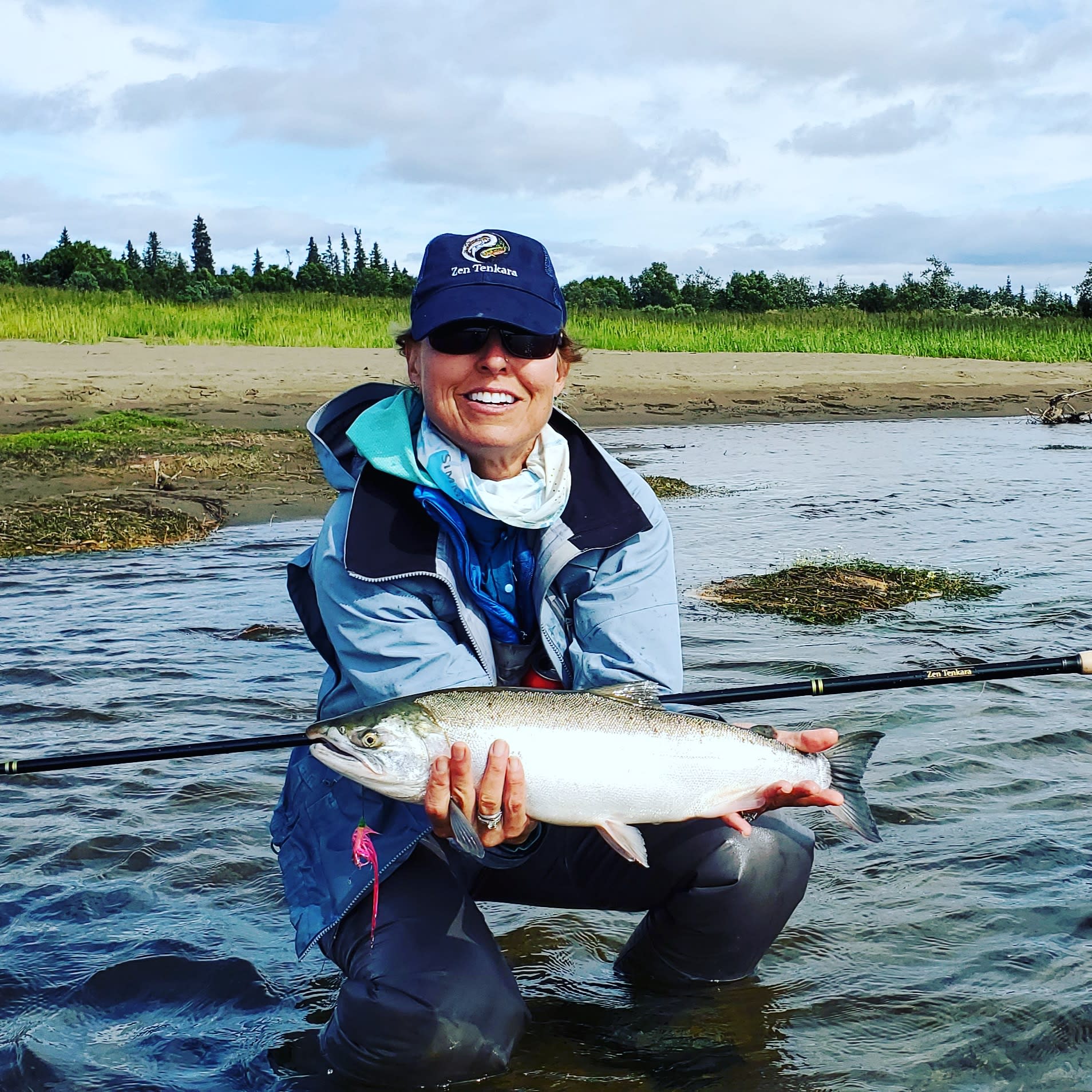
My proficiency grew and I started to look forward to spending time on the water. Knots were less frequent and less annoying. Casting became more accurate. Playing and landing fish actually became fun. And while I still tried to rarely touch fish (which now we recognize as a good thing), it no longer made me cry. I laughed and giggled. I found myself relaxing and enjoying my days spent fly fishing with my tenkara rod.
In time, I became curious about my old, abandoned rod and reel set up. I wanted to pursue more and different experiences. I wanted to push my fishing skills and have more fishing adventures. The fly fishing industry began to offer actual women waders! I was happy and feeling like a confident angler. I decided to return to the reel.
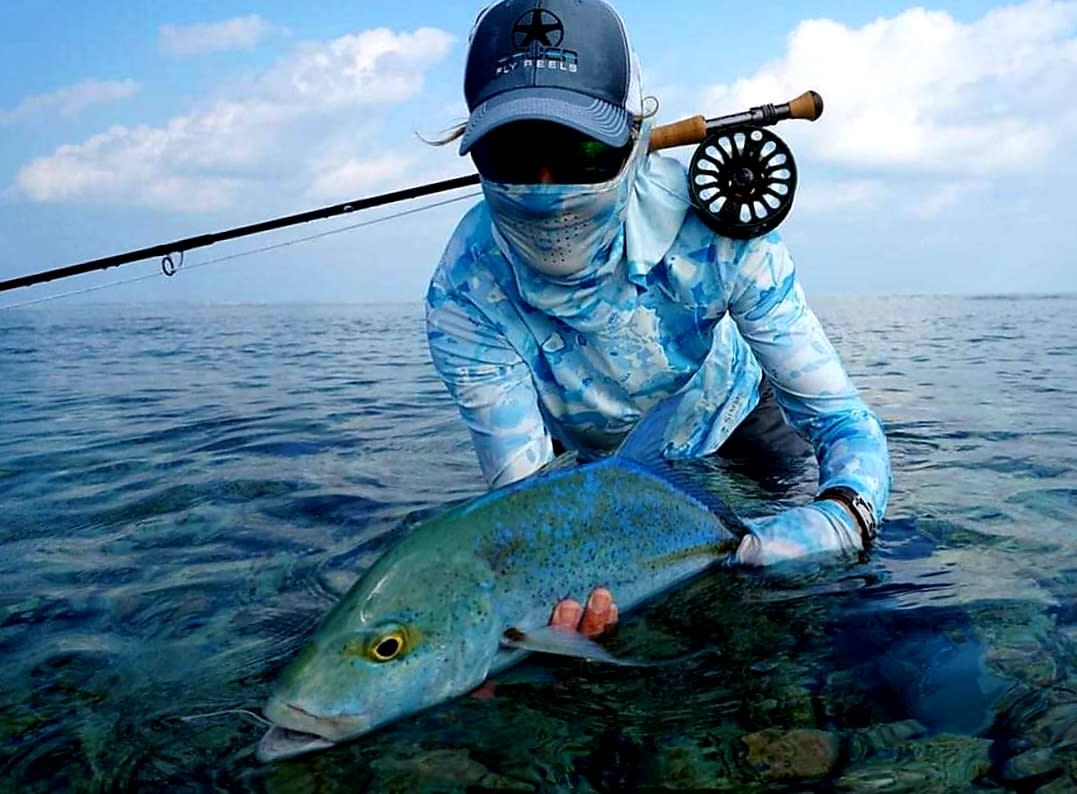
Years later I am no longer the Reluctant Angler. Today, I describe myself and a passionate angler, confident and competent, do I dare say skilled? I fish both tenkara and a regular fly rod and reel. My fishing journey has taken me across the globe and even into the salt for adventures and species that many anglers dream of. Most recently I've begun Spey casting. This is a direct result from time spent casting long tenkara rods with longer and heavier tenkara lines. Undenounced to me, I taught myself the Snap-T and Reverse Spey casts, naturally, while fishing with my tenkara rod. Applying the very same mechanics and movements that I use with long line tenkara casts, I quickly acquired Spey casting and in a very short period of time, have become fairly proficient at this style of casting. And still, my fly fishing journey continues.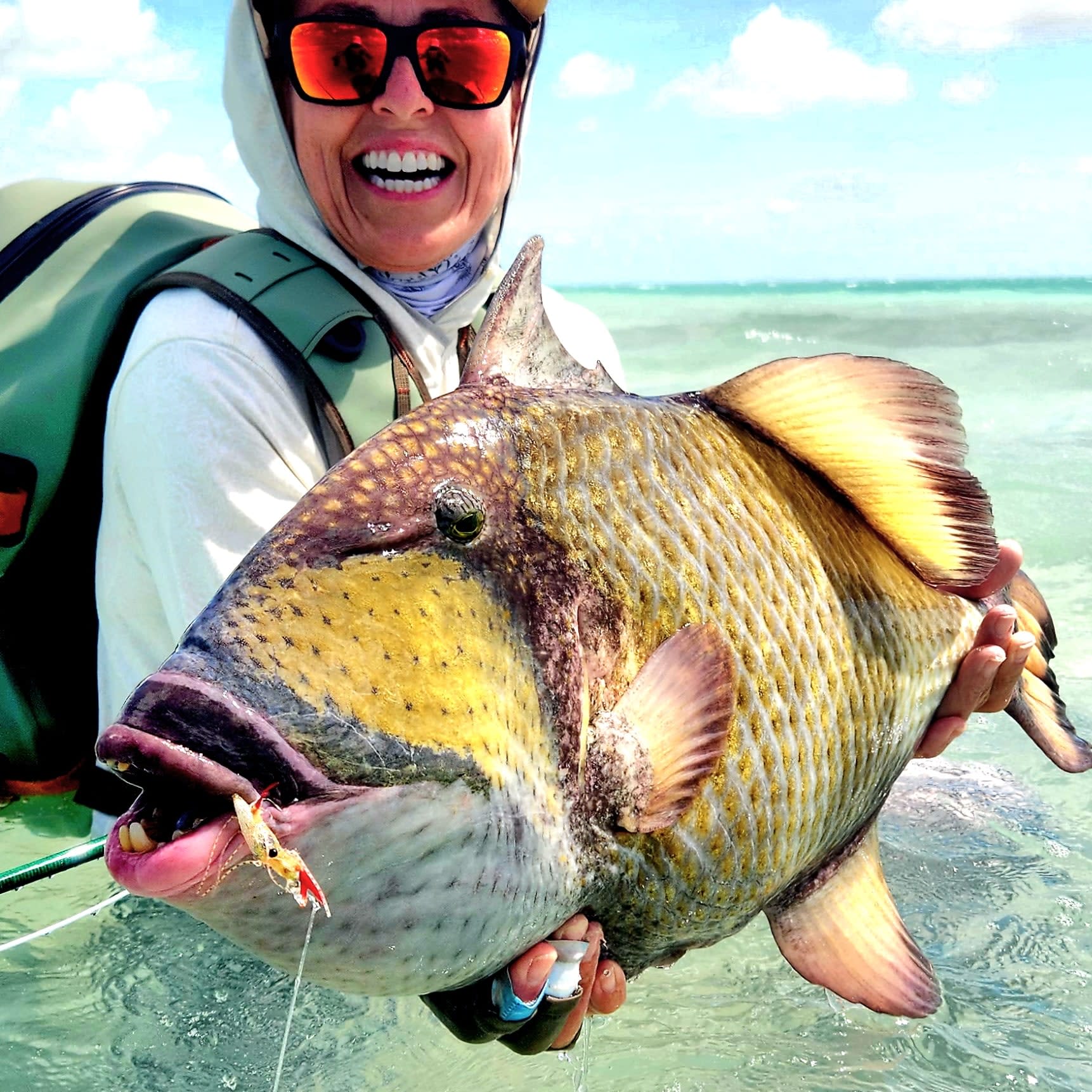
But no matter how many fish I land, places I travel to or species of fish I catch, I will forever and always be grateful for and attribute my fishing skills to time spent on a tenkara rod. This fixed line method of fly fishing taught me so much, so many nuances, about casting, rod load, flex profiles and characteristics, line weights, presentations, hooksets, fish management. I could go on and on about what I've learned from this simple style of fly fishing. Even my saltwater success I owe to tenkara - whether it be teasing a trigger or staying connected to an arial tarpon, it all boils down to the foundational skills, the fundamentals I learned, acquired and honed, using a tenkara rod.
Am I an awesome angler? I don't know that I would say that. Do I catch fish in both fresh and saltwater? Yes. Have I landed "difficult" species and spectacular fish? Yes. Do I screw up and f#@k up? Yes. As a fly angler we know luck has a lot to do with it. But I also know so does my experience tenkara fishing.
So, as Thanksgiving approaches in the coming few weeks, I'd like to express my gratitude and thankfulness for having been exposed to and taught to fly fish on a tenkara rod. It has made me a solid and respectable caster and fly fisher. Tenkara has provided me the opportunity to start a business, follow my passion, explore the world and make friends around the globe. But mostly, I am grateful for that feeling I now get each time I approach a river or water. It's a feeling of hope, of possibilities and potential. There is a kind of joy in the anticipation of what might or could be. Now, when I approach water it's comforting, like I'm coming home. My body relaxes, my mind quiets, I feel still and present even through the excitement and soul-satisfying sensation of a tap, hit or strike. I would never have found this pleasure had it not been for tenkara. Its unpretentiousness, its approachability, its simplicity lured me in, made me feel like fly fishing was "doable". Tenkara minimized my frustration and increased my learning trajectory. Tenkara made me the fly angler I am today. The once Reluctant Angler, is no more.
Tight lines and happy fishing.
Karin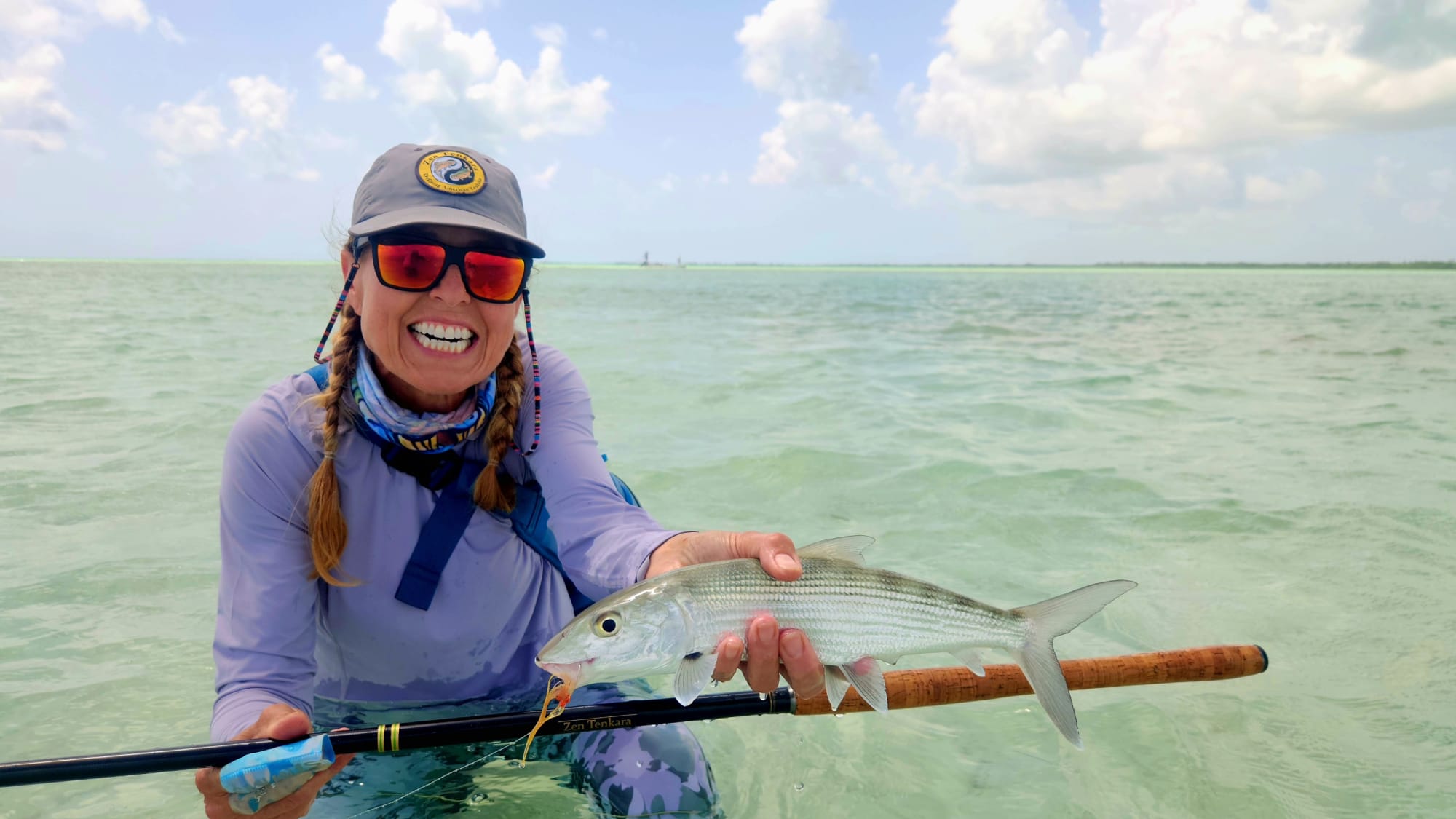
Images
Powered By GrowthZone