
By Rick Crawford Before I launched Emerger Strategies in 2016, I assessed the major brands in the fly fishing industry based on what I found on their websites and determined that most were giving back to conservation, but hardly any were doing anything to clean up their own act. This is largely true today, but some brands and retailers are leading the pack, such as Patagonia, Mayfly Outdoors, and Fishpond, which are all B-Corps, as well as Angler’s All, Driftless Angler, and Emerald Water Anglers, who have all taken meaningful strides to reduce their carbon footprint as members of the Fly Fishing Climate Alliance. I am a firm believer in the power of collective action, so what would happen if every brand and retailer in the fly fishing industry took meaningful steps to conserve resources, minimize waste, support conservation, and advocate for public lands? The impact would be massive, so where to begin? A good place to start is The Sustainability Toolkit, which every AFFTA member has access to. Here are some additional ways your business can start measuring and improving your sustainability performance today. Sustainability is Conservation Sustainability is defined as “meeting the needs of the present without compromising the ability of future generations to meet their own needs.” We need natural resources to survive today, but we should also conserve them so future generations can meet their needs too. Conservation can be defined as a “prevention of wasteful use of resources” or as “preservation, protection, or restoration of the natural environment.” In the fly fishing industry, our businesses are 100% dependent upon healthy fisheries, and because no fish = no customers, it makes sense to protect and restore fisheries habitat and, equally important, to advocate for full funding of NOAA, our public lands, and strong climate policy. For example, at Emerger Strategies, we are 1% for the Planet members, so we donate 1% of our annual sales to environmental nonprofits, such as Bonefish & Tarpon Trust, Trout Unlimited, Protect Our Winters, and the Conservation Alliance. I have also traveled to D.C. with Ocean Conservancy and will be heading back up in May with the Conservation Alliance to protect the Boundary Waters from mining, amongst other public lands issues. If your brand or shop is not at the table, our industry and what we value is on the menu. How-To: I recommend reviewing how much your company donated to environmental nonprofits in 2025 and comparing that amount as a percentage of sales. If you are even remotely close to donating 1% of sales, I recommend joining 1% for the Planet. Through your membership, you can donate to the aforementioned nonprofits and many more. Reduce Energy Use & Harmful GHG Emissions to Mitigate Climate Impact on Fisheries Energy efficiency is by far the lowest-hanging fruit for any business, improving sustainability performance and reducing costs. It is recommended to get an energy audit for your business to identify where your energy inefficiency is coming from, but simply switching to LED bulbs can reduce your electricity bills by 10% while simultaneously reducing harmful greenhouse gas emissions. Once your business is as energy efficient as possible, and especially if you own the building, it makes sense to explore renewable energy options like solar and wind, which can help significantly reduce your energy consumption and costs, while reducing harmful greenhouse gas emissions. For example, Driftless Angler installed solar panels on their fly shop, which reduced their annual energy costs 75%, and reduced their scope 2 GHG emissions 94%. Energy efficiency and renewables are smart business, especially as electricity and natural gas prices continue rising. How-To: Collect 12 months of energy data from your utility bills (kWh for electricity and therms for natural gas), then conduct an energy audit, or start small by upgrading to LED bulbs, or go further by installing solar, and then conduct this same exercise to see how you have reduced your energy consumption and costs. Conserve Water to Protect Fisheries Water is the most valuable resource on the planet and the lifeblood of fly fishing, so it makes sense to conserve water in manufacturing, at your shop, and in our daily lives. According to the EPA, we can all use at least 20% less water by installing water-efficient fixtures. It also makes sense to prevent harmful chemicals from entering our waterways to protect clean water, and I can think of no better example of a company investing in clean water than Mayfly Outdoors. They manufacture and anodize Abel & Ross reels and Dyna-King & Renzetti tying vices in Montrose, CO, and, through their sustainability investments in their anodization facility, discharge zero wastewater by either recirculating or evaporating the water. If you are unfamiliar with the anodization process, it typically generates wastewater containing acids, heavy metals, and other contaminants that can harm aquatic life. Also, water conservation reduces your operational costs, so let’s protect our waterways and save some money in the process through water conservation. How-To: Similar to energy, collect 12 months of water data from your utility bills, install low-flow fixtures, and perform the same exercise next year to see reduced water consumption and costs. Zero Waste Operations & Sustainable Packaging to Prevent Polluting Rivers & Oceans If your brand or shop diverts 90% or more of your waste from the landfill through recycling or composting, you are a zero-waste operation, and as waste tipping fees rise annually, you will also save money. In a manufacturing setting, waste = squandered corporate assets, because you are literally throwing money away through inefficient design. I am sure many brands are already with EPR of packaging regulations in states like California, Colorado, Oregon, and others, where “producers” are responsible for measuring by weight and type of packaging material how much they are sending into states with EPR regulations and pay higher fees for packaging that cannot be recycled, or is hard to recycle. Brands that do not comply face large daily fees that accrue, making the switch to more sustainable packaging the most economic sense. How-To: Conduct a DIY waste audit to discover the different waste streams of your businesses, then see how recycling or composting can reduce the amount of waste being sent to the landfill. Protect What You Love I love the Lowcountry, and Spring is my favorite time of year here. Azaleas are blooming, soft shell crabs are on the menu, and redfish are starting to tail the flats as crabs emerge from the pluff mud. Birdsong fills the air, the sweet scent of Carolina jessamine drifts on the breeze, and the shad start running as the first dogwoods bloom. These are just a few of the spoils of Spring here in Charleston and some of the reasons I am working to protect what I love by serving fly fishing retailers and brands who understand that measuring and improving their sustainability performance is not only good for the long-term health of their businesses, but also because there is a real business case for sustainability, such as: reduced costs, increased customer loyalty, enhanced reputation and mitigated regulatory and environmental risks. So, if growth is inevitable, then sustainable growth is imperative. If your shop or brand needs help making the business case for sustainability, check out The Sustainability Toolkit for DIY tools and resources, or contact me directly at rcrawford@emergerstrategies.com or at 912-441-3183.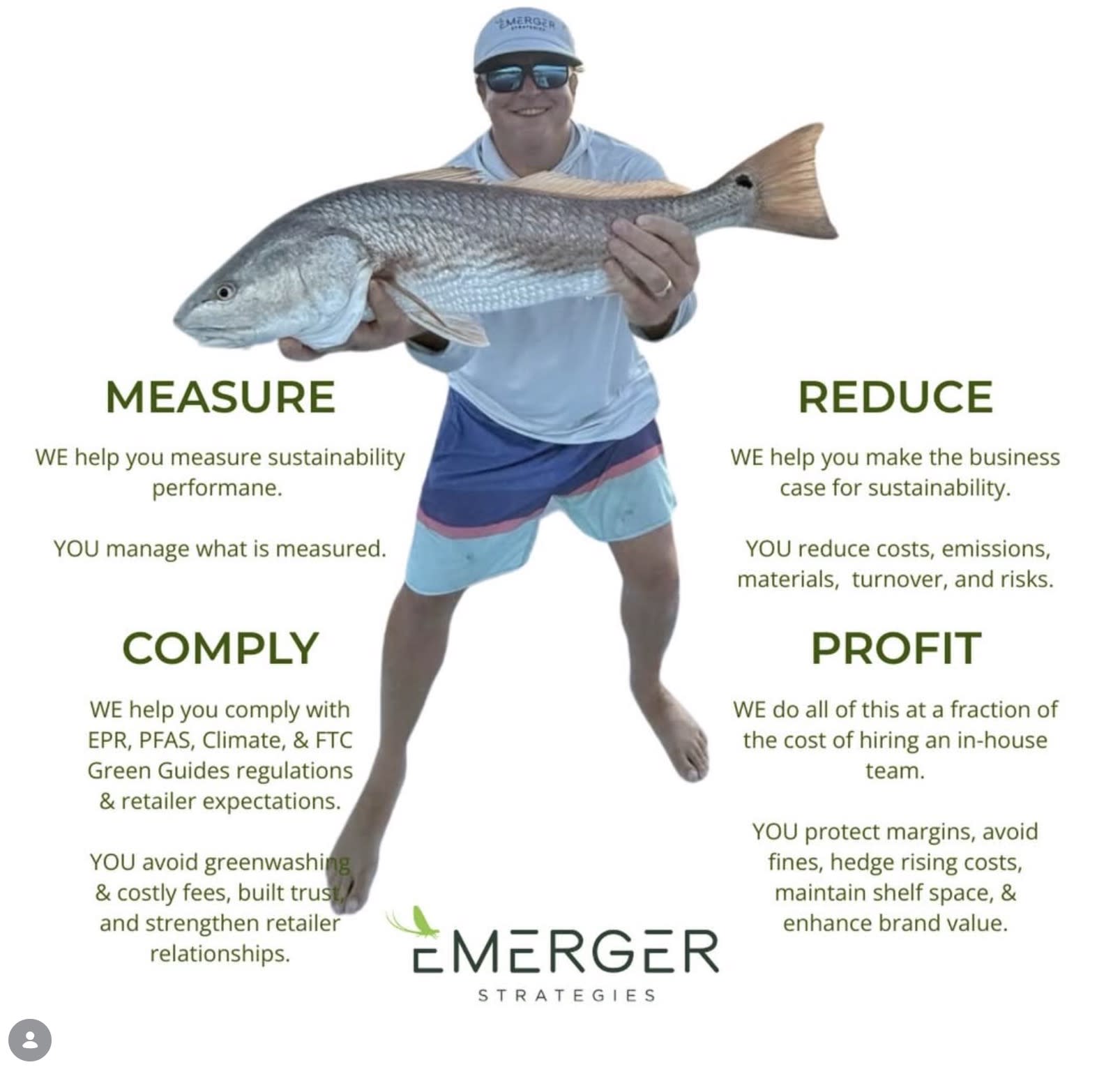
Protect What You Love: How Sustainability Helps Fly Fishing Brands & Retailers Conserve Nature & Restore Growth

Powered By GrowthZone